You have asked three times. They have not moved.
You feel the frustration rising, so you ask again, louder, and they still do not move. You threaten a consequence. They push back anyway. Now you are in a full power struggle over something that started as a simple request.
This loop repeats itself daily in most households: the same request, the same 3 rounds, the same fight. The standard fixes, repeating, escalating, threatening, and giving in, usually make it worse.
Your child is not simply ignoring you. The way most parents manage defiance quietly trains children to require more and more before they comply.
Contents
Why children stop listening
Children in a repeat-and-escalate pattern have learned one thing: the first request is not real.
If a parent asks, asks again, warns, repeats the warning, then either escalates or backs down, the child learns the threshold. They are not being defiant on principle. They have learned the first ask is not the real ask.
They learned your first ask is the warm-up. The real ask arrives when your voice changes. The child is doing exactly what the pattern has trained them to do.
There is also a second driver: autonomy. Children between the ages of 2 and 7 have a strong developmental drive to feel in control of their own body and choices. Every instruction is an invitation to resist, not because they are trying to frustrate you, but because "I decide what I do" is the drive underneath almost everything they do at this age.
We ran this pattern for two years before we understood what it was teaching. Our son was not defiant. He was waiting for the real ask. The first three had always been warm-ups.
The Grip: the defiance mechanism
Think of a child's autonomy drive as a hand on the steering wheel.
When a parent grabs the wheel hard, the child grabs back harder. The car swerves. Both parties are now in a fight over control, and the original destination is forgotten.
The Grip protocol is not about removing the child's hand. It is about driving in a way that does not trigger the grab.
The three moves that keep both hands on the wheel:
- One clear ask, once. The first ask is the real one. Not the fourth.
- Choice inside the boundary. You do not budge on the limit. You give ground on how they get there.
- Calm follow-through. When the child refuses, the parent acts. Without debate. Without heat.
None of these moves require the child to want to comply. They require the parent to stop training compliance to require 5 repetitions.
The 4-step compliance protocol
Use this sequence for any non-optional request.
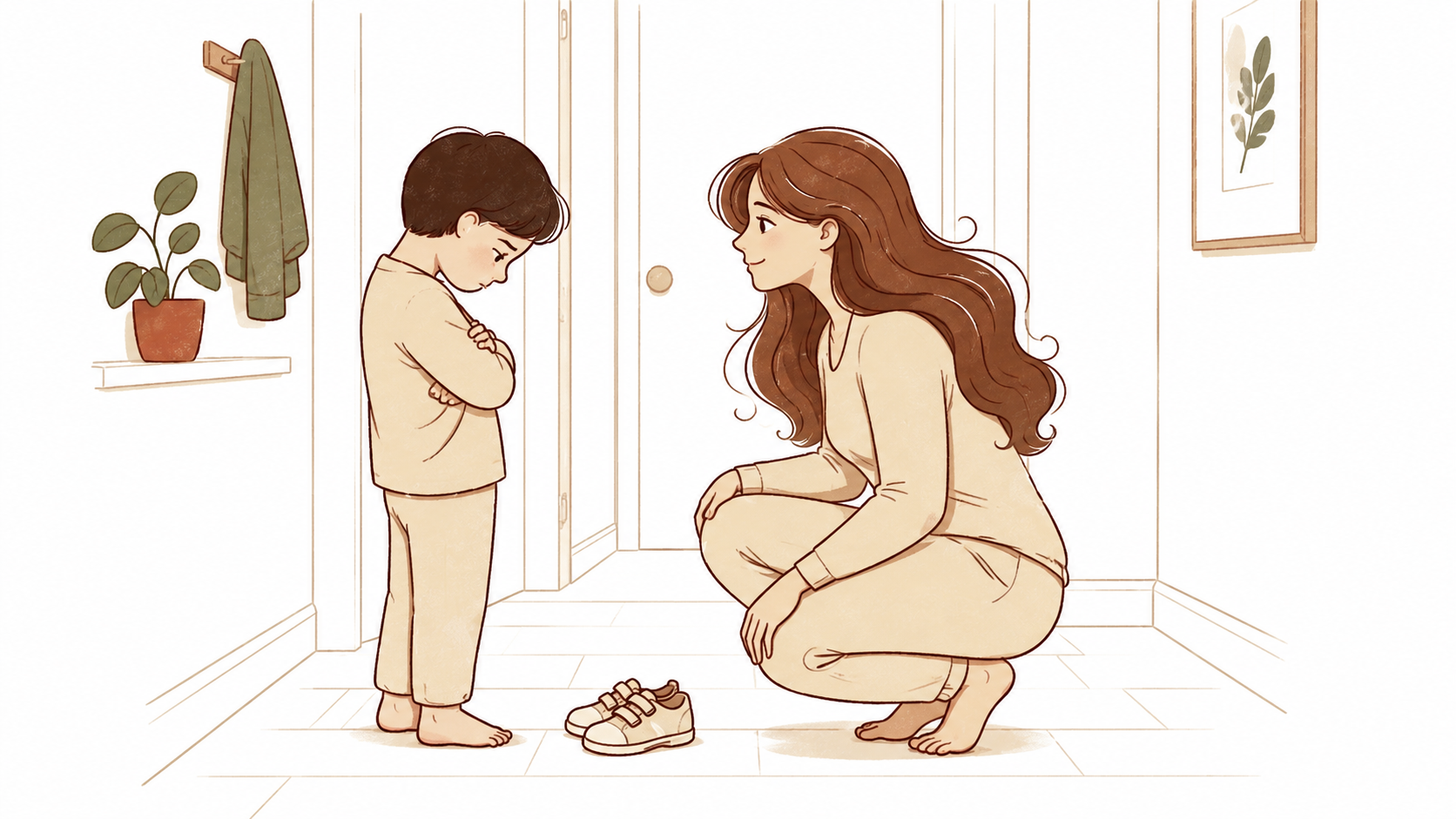
Step 1: Get close and get low. Move to within 3 feet. Crouch to eye level. Do not call instructions across the room. Physical proximity signals that this is real.
Step 2: State once, quietly. One instruction. Short. "It's time to leave". Not "How many times have I asked you to get ready?" Not "We need to go right now or we're going to be late". One sentence.
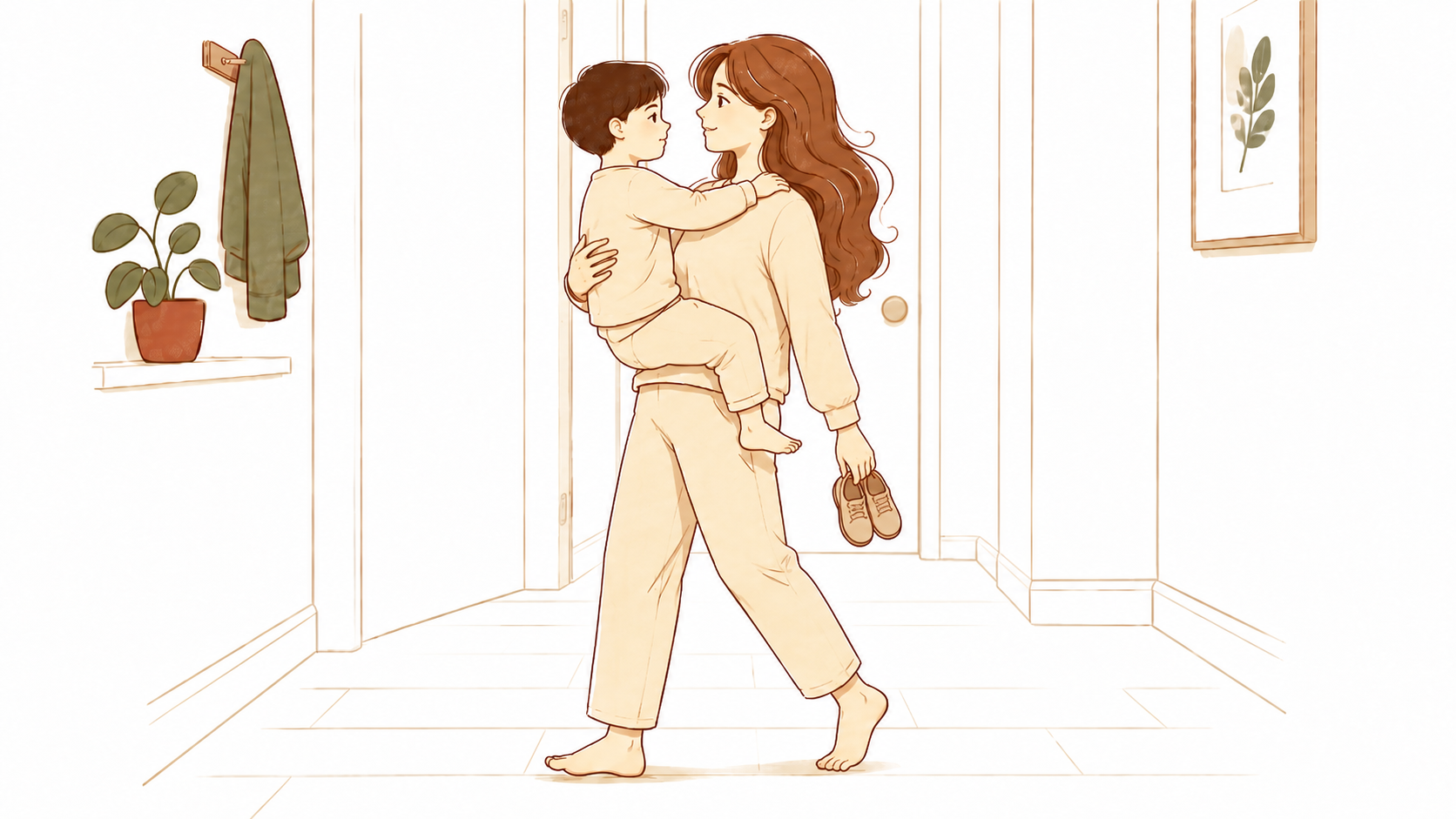
Step 3: Give a real choice. "You can walk to the car or I can carry you". "You can do it yourself or I can help you". Always two options. Both options lead to the same outcome. Never offer an option you cannot or will not follow through on.
Step 4: Act on the answer. If they choose an option, honor it. If they refuse both choices, calmly take the action. No lecture. No renegotiation. The action is the message.
The key: the whole sequence should take under 60 seconds. Speed and calm together signal that the request is real and not worth fighting.
What to say
| Situation | Do not say | Say instead |
|---|---|---|
| They ignore the first ask | "Did you hear me? I said it's time to go". | Move close. Crouch. "Time to go. Walk or carry?" |
| They say no | "Excuse me? You do not say no to me". | "I hear you. That's the rule. Walk or carry?" |
| They negotiate | "But I just need one more minute...". | "I know. Time's up. Walk or carry?" |
| They escalate | "If you don't move right now, I'm leaving without you". | Stay slow. Stay low. "I'm going to help you now". Act. |
| After the transition | "See? That wasn't so bad. Why do you always make it so hard?" | Nothing. Or: "Good". Move on. |
| They comply slowly | "Faster! We're going to be late!" | Nothing. They are complying. Let it count. |
What to do if it fails
The protocol fails in two places.
You repeat before following through. The child has learned that "walk or carry" is followed by "walk or carry?" then "I mean it, walk or carry" before anything happens. Set the threshold at one ask, and keep it there, even when you are tired. Especially when you are tired.
You give a choice you cannot honor. "Walk to the car or we're staying home" is not a real choice if you have to leave. Only offer choices with real follow-through. Kids test the small choices first. When those hold up every time, they stop testing the big ones as often.
The child escalates to meltdown. Defiance and a full meltdown look different. If the child moves from arguing to full emotional collapse, switch from the compliance protocol to the meltdown protocol. Containment first, compliance later.
Nothing is working over weeks. If consistent, calm limit-holding is escalating rather than settling the pattern after 3 to 4 weeks, look at the baseline: sleep, nutrition, major transitions at school or home, or a sensory or developmental profile that changes how limits land.
The parent habit to build
Most compliance failures start before the instruction is given.
The habit to build: ask once and mean it from the first word.
Before you give an instruction, ask yourself: am I ready to follow through right now? If not, do not give the instruction yet. An empty instruction erodes your signal.
Implementation intention: "When I need compliance, I will get close before I speak".
The physical move (closing the distance) becomes the cue. The instruction follows. The follow-through closes the loop.
One miss is fine. Two becomes the pattern. If you repeat and escalate through one interaction, run the protocol the next time. The brain builds the habit from the most recent repetition. Start over.
The Defiance Reset
This article is the protocol. The Defiance Reset installs it: a rehearsal script for the 60-second sequence, a co-parent sync sheet so both of you are running the same protocol, and a troubleshooting tree for the situations where calm follow-through needs to be rebuilt from scratch.