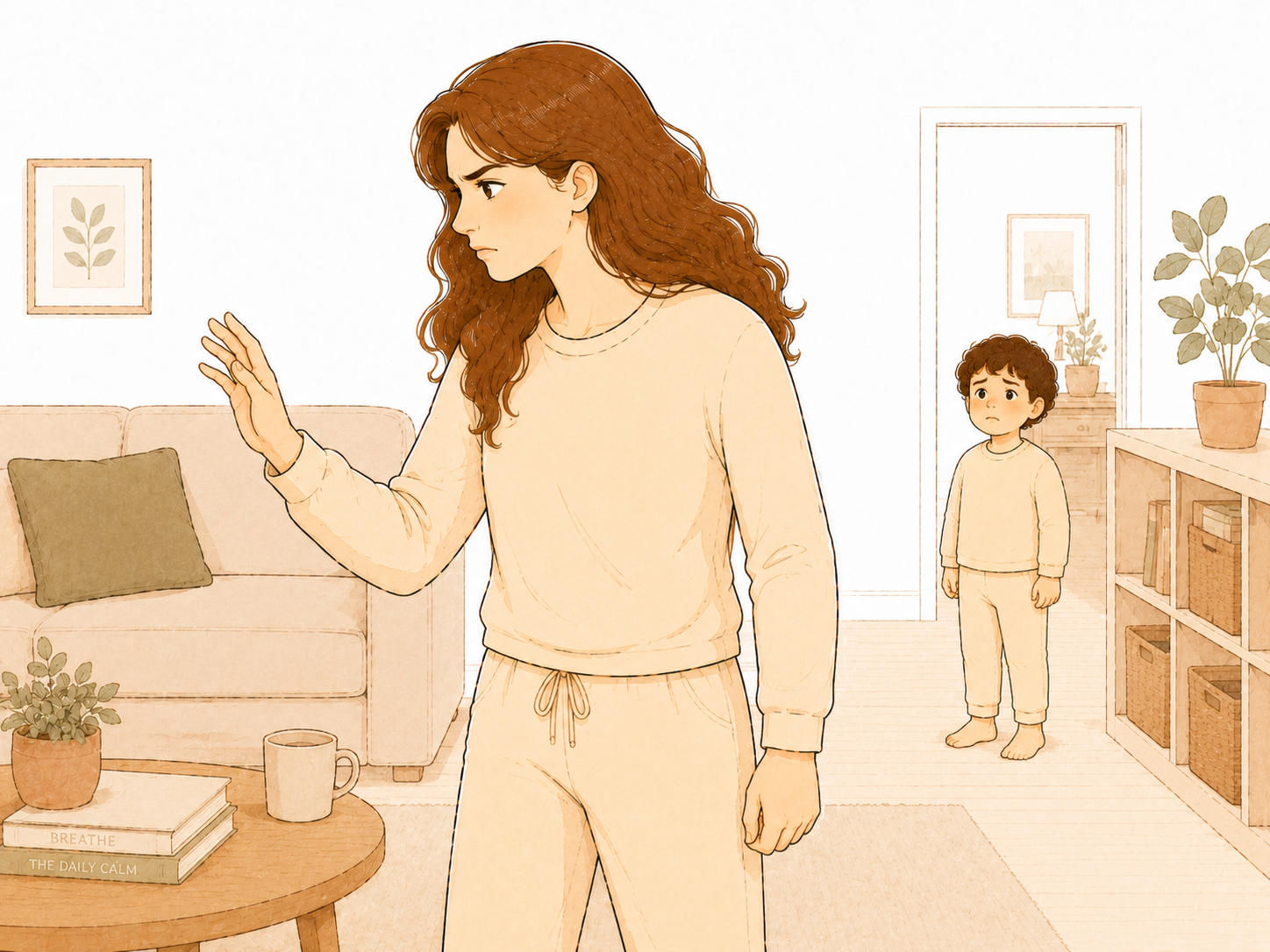
You yelled again. You swore you were done with that. You were.
And then they pushed the same button, at the same exhausted hour, and it happened before you finished thinking.
If you are reading this, you already know yelling does not work. The child escalates, shuts down, or cries, and you feel worse than you did before. You have tried willpower. You have apologized. You have made the promise again.
You do not lack commitment. The problem is the half-second before the yell. Your body has already moved before your promise catches up. Willpower didn't work. This will.
Contents
- Why you keep yelling
- The Weather System: the parent-trigger mechanism
- The 3-step interruption protocol
- What to do in the moment
- The pre-loaded if/then
- What to do if it fails
- The parent habit to build
Why you keep yelling
Yelling has a track. Same hour, same child, same feeling in your chest, same old move.
The trigger is usually predictable, a specific behavior from a specific child at a specific time of day, and what you're craving in that moment is relief from the pressure it creates. The yell is the routine that gets you there. It works just long enough to keep happening: the noise briefly stops.
The yell works in the short term. It makes the child pause long enough for the noise and the pressure to drop. That short-term relief is why the brain files yelling as a successful response, even though it costs you more later: the relationship damage, the shame, the next blowup.
Every time you yell and it "works," the loop strengthens. Willpower does not break this loop. The only thing that breaks it is a new move attached to the same trigger.
Three additional factors make the loop harder to interrupt:
- Sleep debt and depletion. At the end of a long day, the capacity for self-regulation runs lower. The gap between trigger and response shrinks. The parent who handled the morning easily cannot handle the same behavior at 7PM.
- The same child, the same button. Parents do not yell uniformly. They yell at specific children in specific moments. The trigger is usually a specific behavior that carries a specific charge: the whining, the defiance, the repetition, the injustice of having done this all day.
- The secondary shame loop. Yelling produces shame. Shame makes you overcorrect, so you loosen a boundary to make up for it. The child learns the pattern. The behavior that triggers yelling can increase because it produces a high-value repair afterward.
The Weather System: the parent-trigger mechanism
Your nervous system changes the room before your words do. You are the weather.
A child reads a parent's body long before the words arrive. Tense jaw. Shortened breath. Movement that's faster and less deliberate. Your kid reads that before you say a word, and it winds them up more.
This is why yelling at a kid who's already worked up usually makes things worse. The child's nervous system is reading your nervous system. If yours is spiked, theirs follows.
We started seeing it in our son before we felt it in ourselves. He would go still. He would go quiet. We had not raised our voices yet. Your regulation is the first intervention. Everything else runs through the signal your body is already sending.
Blame doesn't change the room. Your regulation does. Change the weather before you speak and you change what the child's nervous system is reading.
The 3-step interruption protocol
Use this sequence when you feel the trigger starting.
Step 1: Name the state. Inside your head, name what is happening: "I'm starting to lose it". That single sentence interrupts the automatic sequence and creates a small gap between stimulus and response.
Step 2: Shift the body first. Drop your shoulders. Slow your breath. This takes 3 to 5 seconds. You do not need to be calm. You need to be one level less lit up than you currently are. That is enough to change the weather.
Step 3: Speak from the lower state. Say the fewest possible words at the lowest possible volume. The voice follows the body. If you slow the body, the voice slows.
The sequence takes under 10 seconds. The first hundred times you will miss it. That is normal. The habit is built from repetition, not from perfection.
What to do in the moment
| Trigger | Do not do | Do instead |
|---|---|---|
| Repeated whining | "I said no! Stop asking!" | Drop volume. "No. That's the answer". One sentence. |
| They ignore you | "Are you deaf? I've said this five times!" | Close the distance. Name the state internally. Ask once, quietly. |
| They answer back | "How dare you speak to me like that!" | "You're angry. I hear that. Here's what happens next". |
| Physical mess or breakage | Volume spike + lecture | Breathe. Act first (handle the situation). Speak second. |
| End-of-day escalation | "I have had it with you today". | Name it internally. "I'm at capacity. I need 2 minutes". Step away. |
The pre-loaded if/then
The most useful thing you can do before the trigger appears is write the if/then in advance.
"If I feel my jaw tighten, I will drop my voice to just above a whisper".
"If they start whining, I will say one sentence at a lower volume than my current voice".
"If I'm already too worked up, I will say 'I need two minutes' and go to another room".
A pre-loaded if/then guarantees nothing by itself. It's a new move you run on the same trigger, every time. The more times you run the new routine when the cue appears, the weaker the old yelling routine becomes.
Write yours down. Put it somewhere visible at the time you are most likely to need it.
What to do if it fails
You yelled again. This is what happens next.
Do not spiral into shame. Shame is a signal, not a correction mechanism. Note it. Move on.
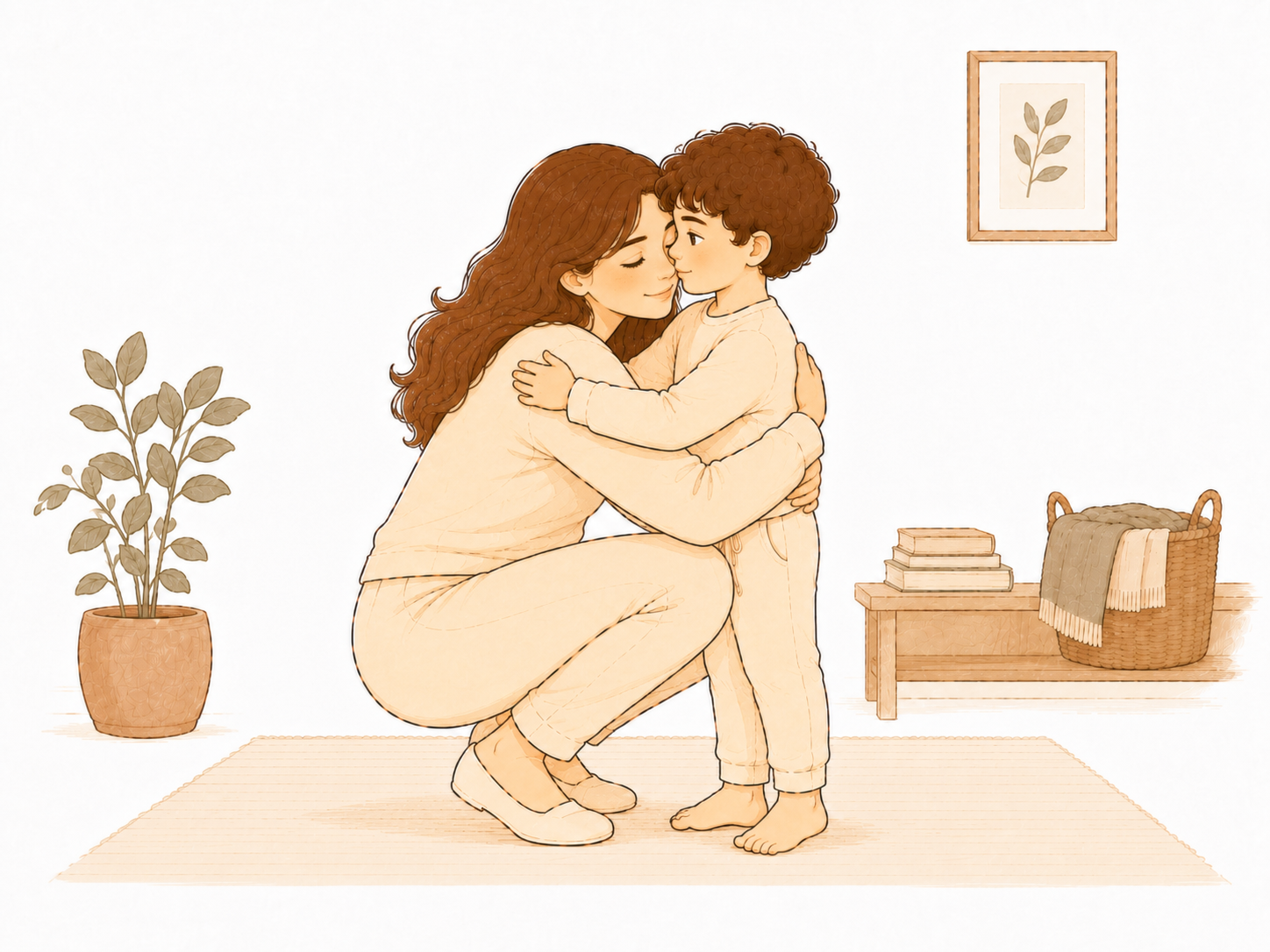
Run the repair. "I got really angry and I yelled. That wasn't okay. I'm sorry". Short. Specific. No over-explanation. See Repair after yelling for the full sequence.
Look for the pattern, not the incident. One yelling incident doesn't tell you much. The pattern does. If you yell on Thursday at 6:30PM when your child refuses to start dinner, that is information about a specific trigger at a specific time. The intervention belongs at 6:00PM on Thursday, not at 6:31PM.
One miss is fine. Two becomes the pattern. You yelled once. The next time the cue appears, run the interruption protocol. The brain builds the new habit from the last repetition, not from an unbroken streak. One good rep after the miss starts the rebuild.
The parent habit to build
The intervention does not happen at the moment of yelling. It happens when your body starts to take over.
The habit to build: notice the physical signal before the yell.
The cue is your body, not their behavior: jaw tension, a shortened breath, heat rising in your face. That signal shows up before the yell does. That is the intervention point.
Implementation intention: "When I feel my throat tighten, I will drop my volume before I say anything else".
Stack this on your highest-risk moment. If it is always the dinner hour, set a 5:30PM reminder that says "low voice". The external cue substitutes for the internal awareness you are still developing.
One miss is fine. Two becomes the pattern. You yelled through Thursday. Run the protocol next Thursday. One miss does not ruin the habit. Skipping the recovery does.
The Parent Trigger Reset
This article is the habit design framework. The Parent Trigger Reset installs it: a rehearsal script for the before-you-lose-it moment, an environment design checklist for high-risk hours, and a co-parent sync card so both of you are working from the same trigger map.