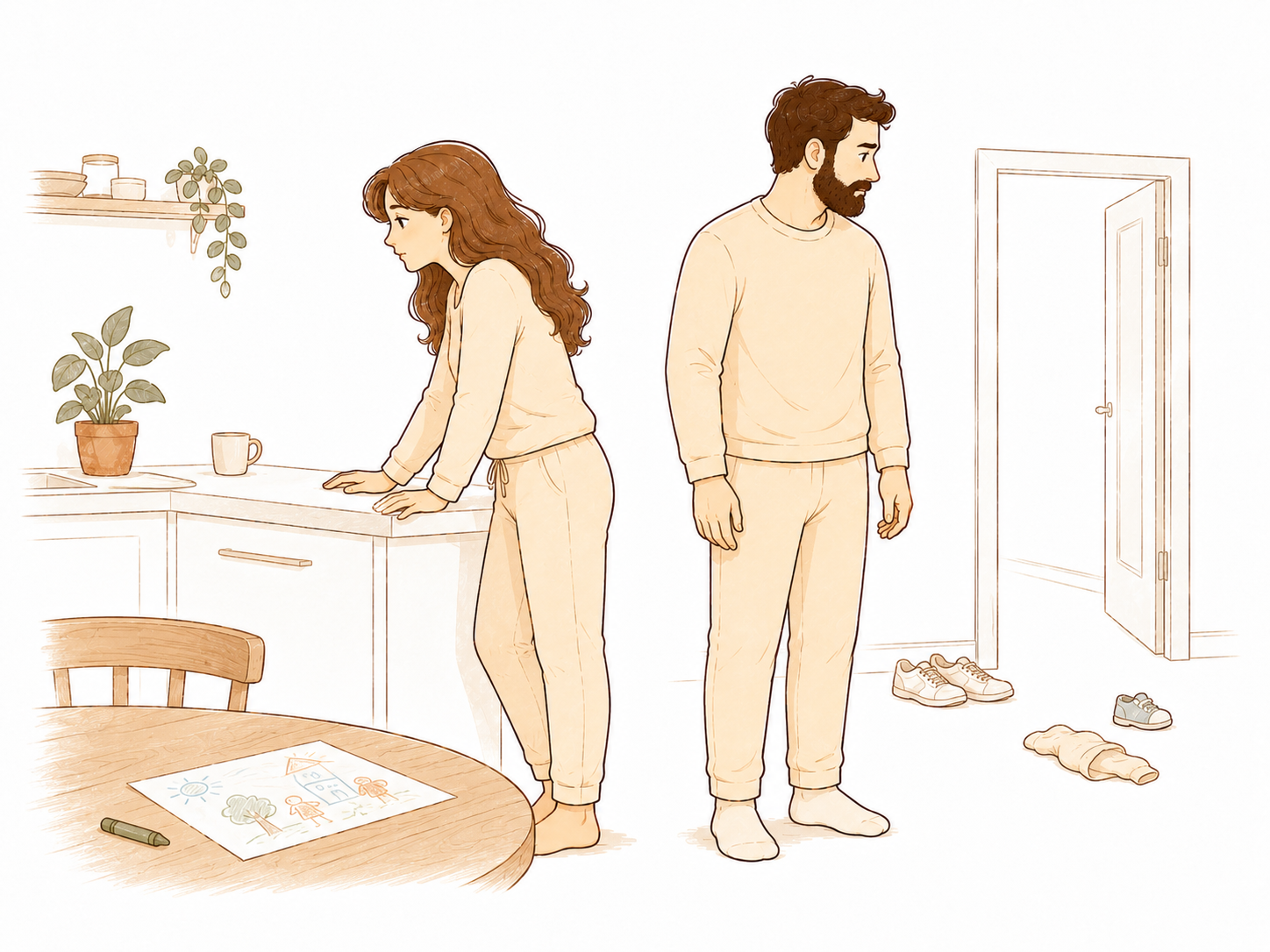
You have read the meltdown protocol. You understand the steps. Then your child hits the floor and you forget all of it.
That is not a failure of the protocol. That is a failure of the principle underneath it.
When our house gets loud, these are the rules we try to come back to. There are nine of them, and they fall into three stages of a single hard moment: how you set it up, how you survive the peak, and how you close the loop after. The protocols are just these rules applied to a specific situation. When a protocol stops working, it is almost always because one rule was broken, usually under pressure, usually before anyone noticed.
You do not need to memorize nine rules. You need to know which stage you are in, and what your job is there.
The three stages
Nine moves, three stages of a single hard moment. You do not work the list, you find your stage.
Set up the moment: before the limit lands.
Survive the peak: when it is loud.
Close the loop: after it breaks.
Set up the moment
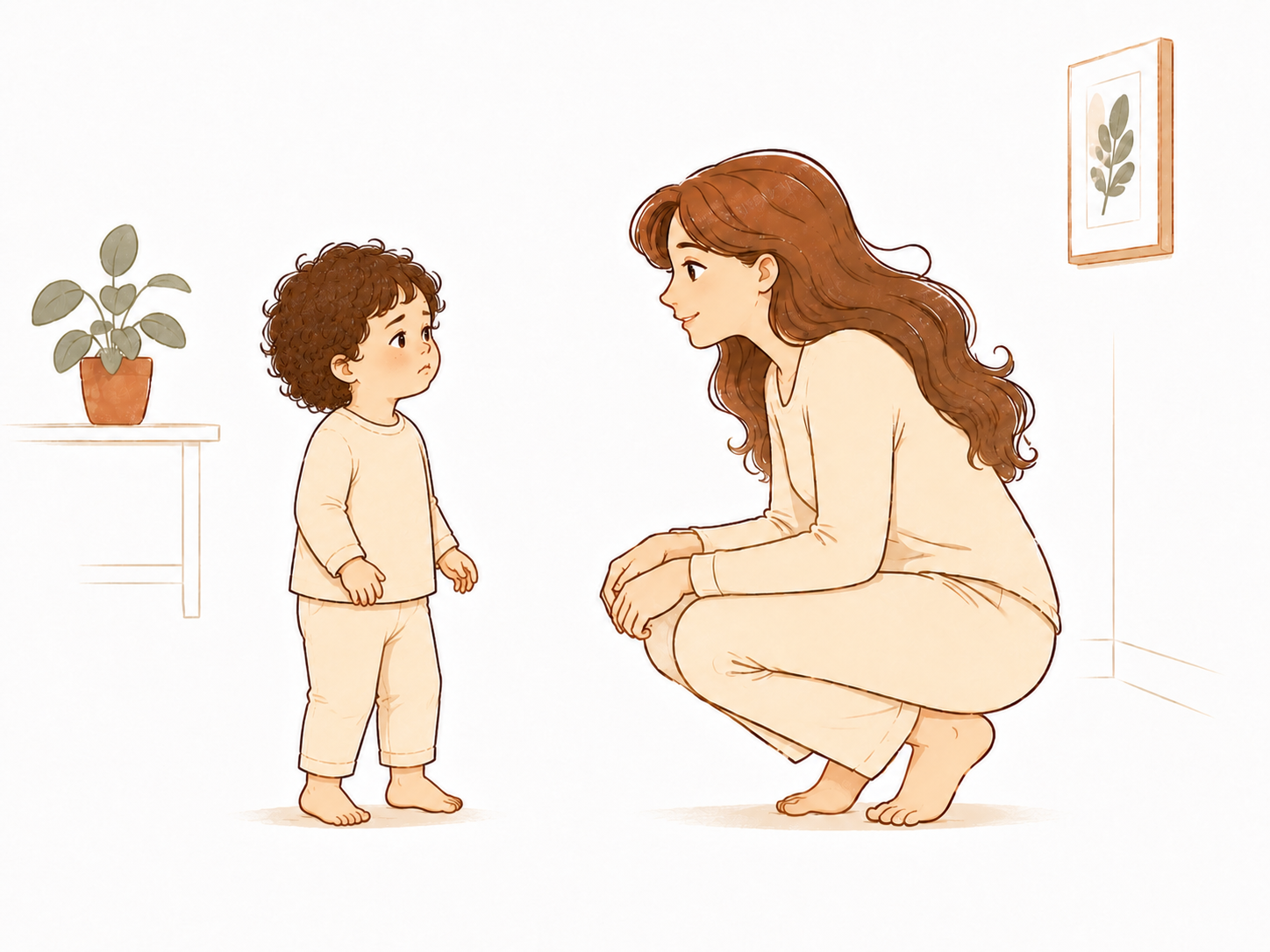
Before the limit lands, your job is to make the child available to receive it. A child who is not set up will fight a reasonable limit. Most power struggles are lost here, in the approach, before the limit is even spoken.
Belonging before boundary
A child who does not feel seen will fight the limit even when it is reasonable.
The limit rarely causes the fight. The order it arrives in does.
When a parent leads with a correction ("stop that," "put that down," "how many times"), the child's nervous system registers threat before it registers instruction. The defiance that follows is about the approach, not the limit.
Belonging before boundary means the child feels acknowledged before the limit lands.
What it sounds like:
I see you really want to keep playing. We need to leave in two minutes.
Not: "Time to go. Let's go. I said let's go".
Acknowledgment feels like a concession. It just points them toward what's next. A child who feels seen is more available to hear it.
Choice inside the boundary
The limit itself does not move. How your child gets there can bend as much as it needs to.
Children between the ages of 2 and 7 have a strong developmental drive for autonomy. Every instruction can register as a constraint on that drive, so the child who fights every direction is often just developmentally on track. Your job is not to shut that drive down. Give it somewhere legal to go.
Choice inside the boundary gives the child agency without making the limit optional.
What it sounds like:
Bath time. Do you want bubbles or no bubbles?
Not: "Bath time. Now".
Both paths lead to the same outcome. The child chose their path through it. The autonomy drive is satisfied. The limit holds.
Reach before redirect
Correction delivered to a child who is not reachable produces defensiveness, not change.
A child is reachable when they are regulated, making eye contact, and not in a defensive posture. A child is not reachable when they are mid-meltdown, recently shamed, or actively resisting. Correction in those moments does not land. It escalates.
Reach before redirect means creating the conditions for the correction before delivering it.
What it sounds like:
A moment of connection first. "Hey. Come here". Let them come. Then: "I want to talk about what happened earlier".
Not: "What you did was not okay. You need to apologize right now".
The second approach delivers the correction to a child who is not available to receive it. Most of the time that gets you a performance of compliance, not real change. Sometimes it gets you a rupture instead.
Script before storm
The parent who does not know what to say before the moment will default to their loudest memory when the moment arrives.
That loudest memory is usually how they were parented. Ours was. We built this site to put something else there first.
Script before storm means putting the words in your body before you need them. Not reading about what to say. Saying it out loud, before the room gets loud.
What it sounds like:
Tonight, read the first line of any protocol on this site. Say it out loud. Once. That is the rep.
When my child starts to escalate, the first thing I say is: I hear you. I'm right here.
Read it. Say it. That is the work. A word you have never said out loud will not appear when the room gets loud.
Survive the peak

When it is loud, your job is to lower the temperature without adding fuel. Less is more: fewer words, lower voice, slower body.
Regulation before words
Language requires a regulated nervous system. When a child is too worked up, words are harder to reach, theirs and yours.
A developing brain under stress simply works this way. It is not something your child is choosing. During the spike, language, following commands, and reasoning are harder to access. The capacity required to hear you is lower than it looks.
Regulation before words means waiting for the window.
What it sounds like:
Silence. Get low. Slow your body. No instruction until the peak passes.
After the peak: "I'm right here. When you're ready, we can figure it out".
When we keep talking into the peak, we are usually feeding the fire we are trying to lower. Every word is more input to a system that has run out of capacity.
Name the weather, not the child
Labels have a way of becoming identity, and identity drives behavior.
"You are so angry" is a statement about who the child is. "You're feeling really angry right now" is a statement about what the child is experiencing. The two versions teach different lessons entirely. A child told they are angry learns that anger is a trait. A child whose anger is named as a state learns that states change.
Name the weather, not the child means labeling the emotion without labeling the person.
What it sounds like:
You're really frustrated right now.
Not: "You always do this. You are so difficult".
The second approach turns a moment into a pattern and a state into a trait. The child will live up to both.
Contain, don't explain
A meltdown is a containment problem. The teaching comes later, once the child can hear it.
At the peak, the brain does not do much with narrative, sequence, or cause-and-effect. None of that mid-meltdown explanation (why the rule exists, what will happen if the behavior continues, what they should have done instead) is landing. Your child is tolerating it until you stop talking, not absorbing it.
Contain, don't explain means holding the space without adding language.
What it sounds like:
Low voice. Close proximity. Minimal words: "I'm here. We'll figure it out".
Not: "This is why we have these rules. When you act like this, it's really hard for everyone. You need to calm down so we can talk about this".
The explanation has a time and place. That time is after regulation returns. That place is the conversation, not the crisis.
Close the loop

After it breaks, your job is to teach when the brain can use it, and to prove the relationship held. Your job continues past the crying, all the way until you close the loop.
Teach in calm, not in chaos
The lesson you deliver mid-crisis is not the lesson the child learns.
A child at the peak of the meltdown remembers the emotion, not the content. The post-meltdown lecture, the explanation delivered while they are still crying, the moral spelled out while they are still in threat response, none of it lands the way you intend. The child who nods and says sorry during the correction has not absorbed the lesson. They have ended the correction.
Teach in calm, not in chaos means holding the lesson until the brain can use it.
What it sounds like:
After everyone is calm, sometimes minutes later, sometimes the next morning: "Earlier when you hit your sister, you were really frustrated. When you feel like that, you can say 'I need space.' Let's practice".
Not: "What you just did was completely unacceptable. We do not hit in this family".
One of these is a lesson. The other is pressure delivered at the worst possible moment for learning.
The repair is the proof
A parent who never repairs a rupture teaches one thing: that ruptures are permanent.
Every hard moment is a test of whether the relationship holds after it. The child who watches a parent repair learns that conflict does not end connection. That lesson does not come from the good moments. It comes from what happens after the bad ones.
The repair is the proof means the recovery matters more than the rupture.
What it sounds like:
I got really loud earlier. That wasn't fair to you. I'm sorry.
Not silence. Not moving on as if it didn't happen.
The repair does not require a long explanation. It requires honesty and specificity. "I was frustrated and I lost it" is enough. The child does not need the full context. They need to see what repair looks like so they can do it too.
How to use these
You will not run all nine correctly under pressure. No one does.
What changes over time is which one you break most, and it usually clusters in one stage: explaining during a meltdown instead of Contain, don't explain, correcting before the child is reachable instead of Reach before redirect, or leading with the limit before Belonging before boundary gets a chance.
You do not need to memorize the list. You need to recognize your stage, and shrink your pattern one move at a time.
Implementation intention: "When I notice a protocol isn't working, I will ask: which stage am I in, and which move am I skipping?"
That question is faster than re-reading the protocol. The move you are skipping is almost always visible in the first ten seconds.
Reset Packs
The Turn Laws are the principles. The Reset Packs are the installation. Each pack takes one protocol and builds it into the body: a rehearsal script, a co-parent sync card, and the troubleshooting tree for when the law breaks down under pressure.