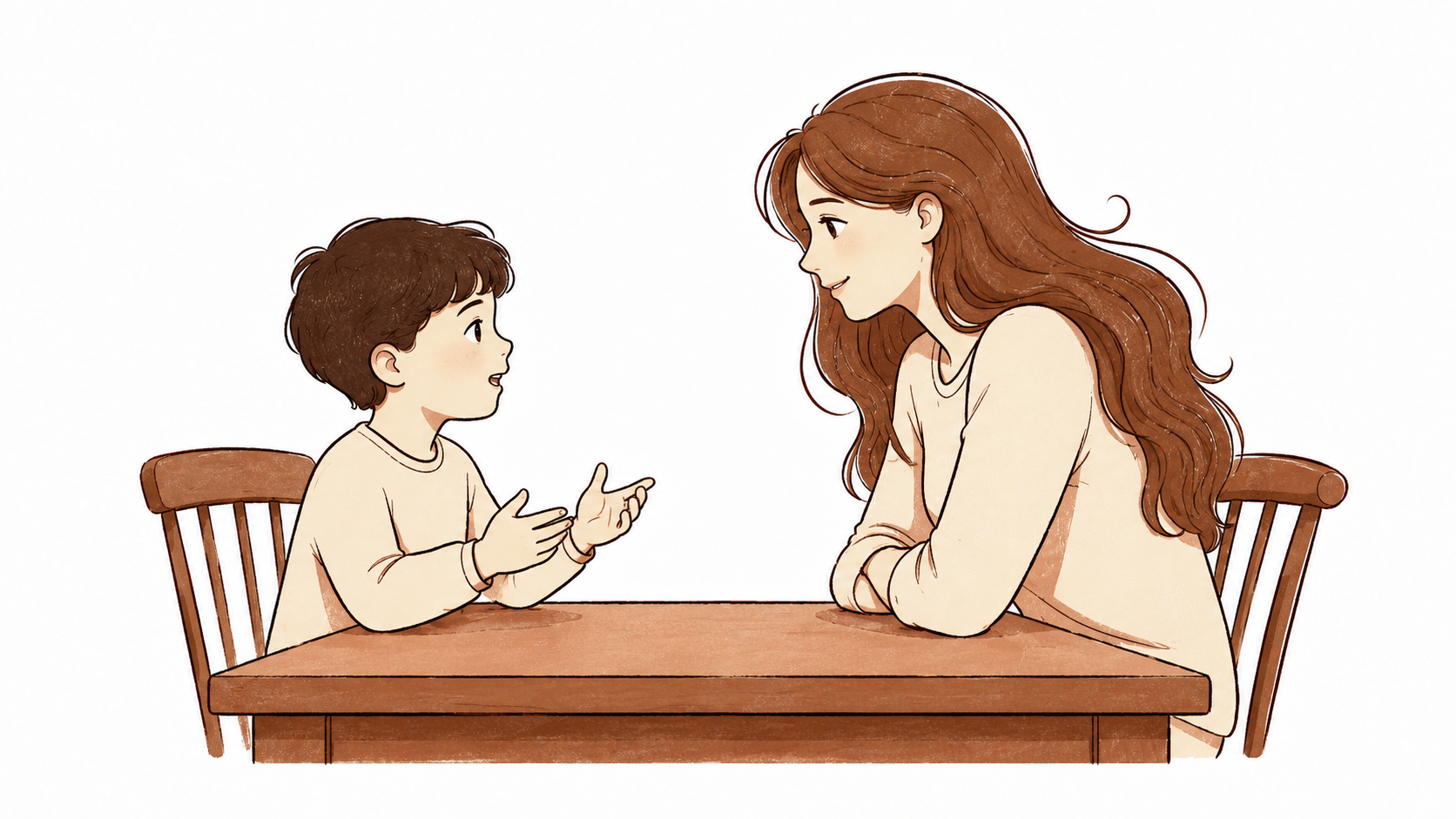
You already know which 3 situations will break down this week. You have known for months. The morning routine. Screen time ending. The sibling conflict over the same toy.
The breakdown is predictable. You talk before the room gets loud, so the plan is already there when the fight starts.
The protocol is a 10-minute conversation. You have it during a calm moment, not when the fight has started. The result is a child who knows what is coming and a parent who has already decided what they will do.
The Turn Law for this moment: script before storm.
In this article
Why reactive parenting fails the predictable moments
A child mid-meltdown cannot receive a lesson. When a child is that upset, language and reasoning are much harder to reach.
The parent who explains consequences during the meltdown is doing their best work at the worst possible time. The same is true for the parent negotiating during screen-time resistance, or the one giving the calm-down speech at the park exit.
The same hard moments usually announce themselves. You know the screen fight before the screen turns on. The parent who responds to the trigger reactively will always be behind. The parent who addresses the trigger in advance, with the child's input, changes the situation before it starts.
There's a name for this: decide the response before the pressure arrives, so there is nothing left to choose under stress. Researchers call it an implementation intention. The choice was already made in the calm.
We are not scripting the child. We are removing the surprise from a situation we already know is coming.
The pre-communication protocol
Run this during a genuinely calm moment. After a meal. During a walk. Not in the car on the way to the trigger. Not the morning of.
Step 1: Name the situation neutrally
"I want to talk about screen time ending. It has been really hard lately".
Not: "We need to talk about your behavior". That brings up defensiveness before the conversation starts.
The goal: both of you looking at the situation together, not at each other in opposition.
Step 2: Invite their experience first
"What makes it hard when the show ends?"
Wait. Actually wait. Do not fill the silence. The child who says "I don't know" is not resistant. They may need 15 to 30 seconds to form language for an experience they have only had as a body feeling.
What they say here is the actual clue. Our son told us: "because you always turn it off in the middle". We had been solving the wrong problem for months. We thought the fight was about screens. It was about the ending.
Step 3: Acknowledge before solving
"So when the show ends suddenly it feels like you didn't get to finish. That makes sense".
Not: "Well, if you behaved better I wouldn't have to turn it off". Not: "The reason we have screen time limits is...".
Acknowledgment is not agreement. It is confirming you heard what they said. A child who feels heard will negotiate. A child who feels dismissed will fight.
Step 4: Brainstorm together
"What do you think would help? What if you got to see the end of what you were watching? What if you chose when to turn it off?"
Nothing here is a commitment yet, just options on the table. The child who contributes a solution is more likely to follow the solution they helped create.
Step 5: Agree on a specific plan
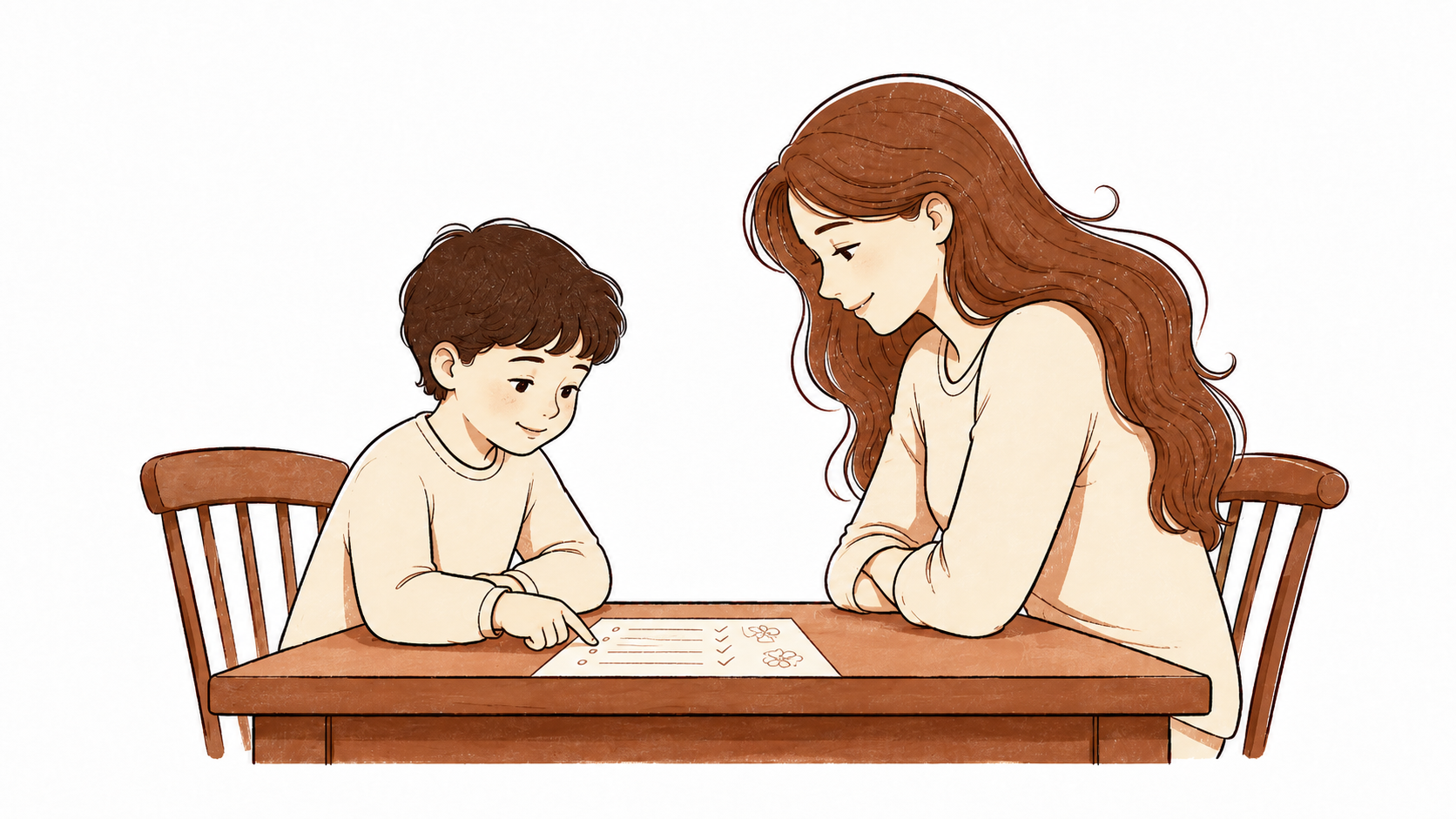
"Here is what we are going to do. At 15 minutes left, I give you a warning. When the warning comes, you find a good stopping point and turn it off yourself. If you do that, we do not have to fight about it".
Be specific. Vague agreements break down when the room gets loud. "Be good about screen time" does not tell anyone what to do. "Turn it off yourself when the 15-minute warning comes" does.
Write it down. Post it somewhere visible. Read it together before the next occurrence.
Scripts
| Situation | Opening line | Invitation | Acknowledgment | Plan |
|---|---|---|---|---|
| Screen time | "Screen time ending has been hard. Can we talk about it?" | "What makes it hard when the show stops?" | "You want to finish what you started. That makes sense". | "15-minute warning, you turn it off yourself". |
| Morning routine | "Getting out the door has been rough lately. I want to fix it". | "What part is hardest for you?" | "You're still waking up and I'm rushing you. That's hard". | "Clothes laid out the night before. One alarm. No rushing". |
| Hitting sibling | "When [sibling] takes your toy, you've been hitting. Let's work on that". | "What happens right before you hit?" | "You feel like no one is on your side. I get it". | "When you feel like hitting, say 'I need help.' I will come". |
| Leaving the park | "Leaving the park has been a fight every time. I want to fix it". | "What is the worst part about leaving?" | "You don't want to stop playing. That makes sense". | "10-minute warning, then you say bye to the equipment". |
What to do if it fails
The child refuses to engage. Do not push. Name what happened: "I want to fix this and I am ready to talk whenever you are". Drop it. Try again after the next incident while the experience is still fresh.
You agree on a plan and the child breaks it when the moment arrives. That is expected for the first 2 to 3 repetitions. The plan exists to shorten the fight, not to eliminate it immediately. When the plan breaks, reference it calmly: "We agreed on the 15-minute warning. I gave it. Now it is time".
Do not renegotiate while everyone is worked up. The renegotiation happens at the next calm moment.
The child says "I don't know" to everything. Try a multiple-choice version: "Is it harder because it's surprising or because you don't want to do what comes next?" Most kids can pick from two options even when they can't explain how they feel.
The plan held but the child is on the floor and will not move. Say once, calmly: "I am going to pick you up now". Then carry them. Keep your voice even. Say nothing else on the way out. Crying isn't the metric here. Whether the agreement holds is. A parent who carries a screaming child without escalating teaches the same thing the pre-communication protocol was building: the plan means something, and the parent keeps it.
The parent habit to build
The pre-communication protocol fails when it only happens during crises. The habit to build is weekly: every Sunday, identify the 1 or 2 situations that broke down last week and run the protocol before they happen again this week.
5 to 10 minutes. Once per week. One situation per session.
Implementation intention: "On Sunday nights after dinner, I identify the hardest situation from last week and have the pre-communication conversation before the week repeats it".
One miss is fine. Two becomes the pattern. If you skip a Sunday, identify the situation mid-week and run the protocol anyway. The pre-communication does not have to be formal. It has to happen before the next hard moment.
The Meltdown Reset
This article is the protocol. The Meltdown Reset installs it: a rehearsal script for this conversation, a co-parent sync sheet so both parents run the same pre-communication, and a troubleshooting decision tree for when the plan breaks in the moment.
The Foundation
This is article 1 of 6 in The Foundation, the complete parent regulation toolkit.
- You are here. The conversation that prevents the meltdown
- The meltdown protocol: What to say in the first 60 seconds
- The transition protocol: Why every leaving is hard and the 4-step fix
- What to do when your child won't listen: The defiance protocol
- What to do after you lose it: The repair protocol
- The 9 rules underneath every protocol: The Turn Laws
Next: The meltdown protocol →